So I recently finished reading From Reverence to Rape, written by Molly Haskell.
Though I did pick up this compact little book pertaining to the history of movies--in general, to some extent, though focusing primarily on women in film--with the narrow-minded inclination of reading up on rape-revenge flicks of the 1970's... I was terribly mistaken: not to say I mind being wrong, on occasion. I found that very little of 70's exploitation cinema was doted on (perhaps because the first edition of this book was put out in the twilight of the 70s) and in turn, I was directed towards a new concept for my ART v. CENSORSHIP section. As though I need more distractions, right?
And this brings me to "MisSinEma: Women in Film." This section is intended to remain a sidebar that only explores the area just behind the entrance of the cave, a sliver of the hidden surface of the iceberg, however you wish to picture this thing. WIthout much explanation in the past, I've mentioned that I wish to research
- Hair Die: How Color Affects Well-Being and Perceived Personality in Film (namely horror)
- Feminine Agency, Villainy, and Power through shades of darkness (film noir, over-exposed Hollywood, and most importantly, horror)
I don't expect "Hair Die" to become too complicated; from Haskell's text, I've picked a few interesting bits on hair color, including:
- the cliche of the "fair-haired and tiny" virgin and "dark and sultry" vamp
- particulars of femme fetale hairstyling

- readings into various "cartoon blonde" sex goddesses
- the plainness/averageness of brunettes of sixties film
- and perhaps most interesting of all, Hitchcockian punishment for ice-queen blondes
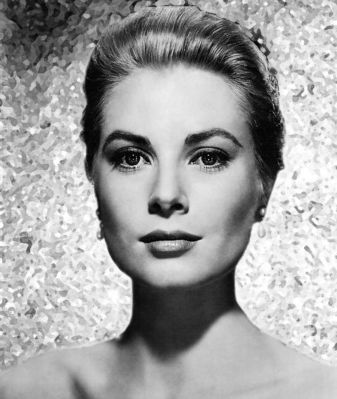

I would definitely like to ask the writer more about some of the above, dwelling perhaps on hair color perceptions in early, silent film (does variation in hair color, especially in films in which an actress would take on dual-personality roles, signify a change in "goodness" or "wealth", etc?). With some serious scrounging, I may be able to turn up more on this.
The topic that has sparked a thousand library rentals, however, certainly must be Feminine Agency, Villainy, and Power. And just last month, this would've been left completely out! Having read From Reverence to Rape in its completion, I found there was so much to be said about the history of film... and this isn't limited to the horror genre. Scholars dedicated to the subject have written several volumes and countless re-editions on the History of Film, and that would make for one massive, ramble-y sidebar. Instead (and best of all: maintaining a thread of connection to the original topic!), I'll focus my attention to, quite self-explanatory, I know: Feminine agency, villainy, and power in film. Again, I will be taking cues from Haskell's book, where she:
- Takes the side of the Difficult Woman who, in her "'unnatural' climb to success... did have to step on toes, jangle nerves, antagonize men, and run the risk of being loved." (p 5)
- Explores Early Hollywood actresses never turning 'off,' and remaining, all the while, elusive and contradictory (a 'dumb blonde' could laugh her way to the bank on the more 'intelligent' audience members' dollars)
- Prompts us, as the audience, not to take any actress's role too literally--not only are some of the most apparently transparent actresses true enigmas, but they held a power, up until the forties, at least, over viewers, no matter the character they happened to be playing.
- Outlines the roadmap of film and characteristics accorded to each era: 20s film was 'progressive,' 30s sexually confident and equal, 40s suspicious of predatory (and oftentimes difficult to like) women, 50s sexually repressed (lack of power counts as power), and 60s and 70s as so-called 'liberated.'
- Sheds light on the battle of the liberations from 20s film, between social-minded flappers and mind-minded suffragettes: "... The 'emancipated woman' of the twenties was either a suffragette or a flapper, depending on what she wanted and how she chose to get it." (p 44)
- Questions how we may identify "strength" in a female character: "The mistake is, first, to assume that only in 'male' roles can women fulfill themselves, and, second, to take labels and conventions at face value." (p 57)
- Brings up the female force making up screen writers in the teens and twenties, as well as a handful of women directors.
- Theorizes on the strength of voice and thus, the lack of strength granted to characters in silent film, and how the use of particular material objects attempted to speak louder than words
- Blames the Production Code and in ways, censorship in general, on setting women's rights [to a good character or role] five steps back.
- Tries out arguments on all sides to the Sexuality/Sensuality as Strength debate.
- Chides some directors for enforcing and tainting characters (with seriously detrimental results for women) with their own biases and fears.
- Pits "superwoman" and "superfemale" character philosophies against one another.
- Points out how unappealing rebellion came to look on 60's and 70's female characters
- Even has the energy to get into the concept of actresses as people, and how the D.I.Y. ethic of fame with no Big Studio Contracts shackled to their feet, translated into female power in Hollywood, and how it didn't.
Even with all this said, questions remain for Ms. Haskell. Given the opportunity, I think I'd like to ask about censorship (comparing the Production Code to modern-day MPAA, whether the presence of censors serves as a catalyst for social change in the form of certain film endeavors, etc), reporting on film trends and history in general, the horror genre, rape revenge cinema, women behind the camera and writing the scenes, the viewing experience, and more I'm far too lazy to write out.
All in all, Molly Haskell's book has proved to be an invaluable find, despite my initial misreading of the title and Haskell's intentions. At the heart of the matter, I'd have to say a good deal of Haskell's genius comes from her unwillingness to simply accept a classic's untarnished status as such; her analysis differs from the mainstream, where most critics seem to have an understanding that these movies, while sometimes wretched and wrought with flaws, may not be taken down from the mantle for anything more than the occasional tribute or undeserved accolade--much less fresh criticism! Here, the movie must prove itself worthy of its garnered fame (or more accurately, at that point, dust)--she uses her inner critic for good, not evil. She breaks down the "classics," and deconstructs the comfortably acknowledged movies so that no director can hide behind an elaborate reputation. This is fair. This is refreshing. This is amazing.